The people who make KONKRET
Daniel Tillias grew up in Cite Soleil, the place where the country stows away the people it forgets, and he made it the place he serves from. From that ground SAKALA was born, more than twenty years of work with Haitian youth. The farming model that employs young people today began in 2011, after the earthquake, and reached toward the North starting in 2021. CNN Heroes 2019 Nominee.
But before the network, before the recognition, there is a man who repeats a single sentence whenever you ask him who he is: I am a servant.
The Portrait
"I would be so sad to have all the money in the world and be cut off from my roots. What I have here, I believe it is the best. And I keep going."
His mother decided everything. A woman of character, driven to do more for her community, she ran her own business and used it to support others. She welcomed the most looked-down-upon first. The water sellers who came in from the countryside, the ones everyone else looked down on, she respected them and let them rest at her place. Her house stayed open to nephews, to nieces, to whoever was in need.
From that comes a certainty that has never left him: in this family, we are servants. Everything he does today, he says, is because of her.
"Everything I do is because of her. She always opened the house to the ones the others would not even look at."
The Cite Soleil of his childhood was not the one shown today. There was poverty, but the role models were not the gangs. The vast majority of children and young people went to school. People organized education contests, science contests. The boys he looked up to were the best trumpet players, the best saxophone players. Some wrote for the newspapers, ran clubs where French was spoken. They aimed for education and they reached it, becoming teachers, agronomists, school principals, Sunday-school instructors.
Many of them stood by him as tutors, for free, because his mother had nothing to pay them with. People knew them, and you wanted to be like them. It is that image, and not the image of the armed man, that imprinted itself on him.
Pasteur Leon founded the Christian Church of Cité, a large church in Cite Soleil. One day, he takes young Daniel to visit the grounds of a church he wants to open, and he tells him that he sees a smart child, that he could be an engineer, that he has the head of someone capable. Daniel held onto that sentence for years. Much later, the pastor heard about SAKALA and he came, with two American visitors, to see the garden that was changing people. Daniel got to tell him to his face: I am doing this because of you.
He did not get that chance with Pasteur Germain, the man with the print shop. Light-skinned, which counted for a great deal back then, he came to Cite Soleil and became one with the community. He parked his car there, ran his print shop, hired the young people of the neighborhood. His whole family took part, his wife at the typewriter, in the days of the big offset presses, in the time of Gutenberg, when you folded the signatures and set the letters by hand. When he ran into Daniel's father, himself a technician who had learned English from the expatriates, the two men would talk in English. That is how Daniel laid down his first foundations in it. He thinks Pasteur Germain passed away before he could tell him what he owed him.
"I see a smart child. You could be an engineer, you have the head of someone capable."PASTEUR LEON, TO DANIEL AS A CHILD
An asthmatic child, he discovers a yoga book at the library, exercises meant to help the body center itself and breathe better. He tries them. One story from the book stayed with him for years: three men chased by a crowd hide near a yogi meditating beside a loom, and pretend to meditate too. The crowd passes, sees four yogis, and keeps running. When the danger is far off, two of the fugitives leave. The third stays. He says he found something there he had never known, and that he wanted to feel more of it.
Daniel wanted to find what that man had found. Ever since, he meditates to calm himself and, he says, to become a vessel ready to receive, ready to be a better servant. A pastor's son, he does not turn his back on prayer. He draws the distinction: to meditate is to recognize what you already have and make it come alive. To pray is to ask, the way he learned as a child. Two levels, one same faithfulness, to his new understanding of the spiritual as much as to what raised him.
"To meditate is to recognize what you already have. To pray is to ask. I keep both."
SAKALA is exactly that: what he received from those men, given back to the same boys who have no one to tell them they are trusted, that they can do better. In Haiti, he says, the ones who end up leading the gangs are often the smartest, the most neglected, the least respected. They are the ones the gangs recruit most easily, sometimes just to play soccer on their team.
SAKALA recruits them differently, as members of the team. Then they find the strength to resist, because they will no longer go for the money or the glory: they have a place, their time is taken up with learning and earning their living. He points to that boy with the strong character who could have tipped over and who today carries responsibilities at SAKALA. On a wall, the children write their dreams: in ten years, this is what I want to be.
"We give them the thing I never knew could be given: someone who says I trust you, I know you can do better."
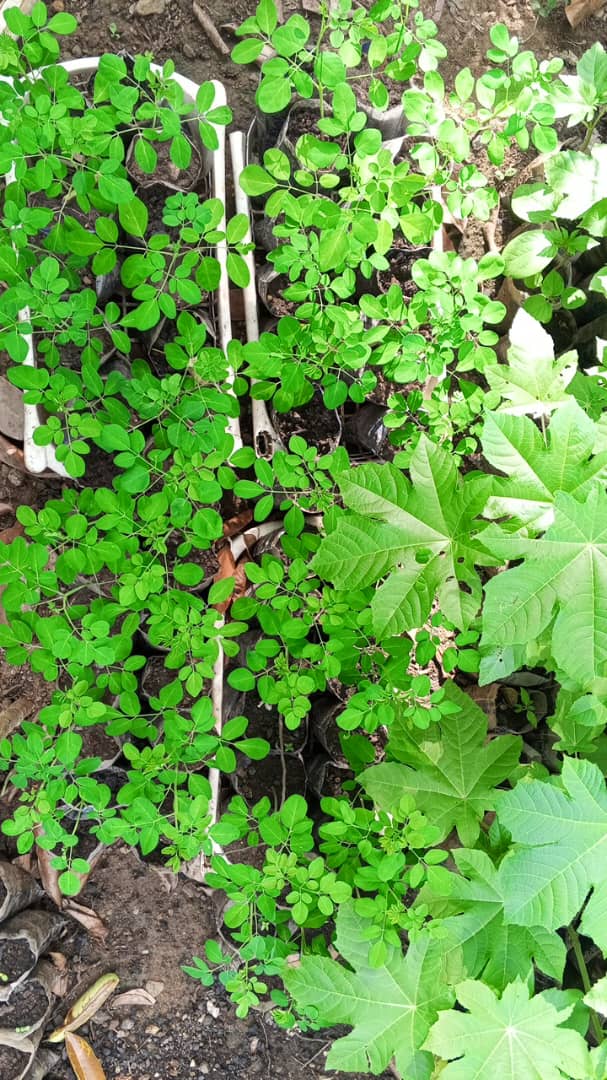
Meditation enters the work with the children too, the ones the street has traumatized. Carefully, because it is sometimes taken for a practice foreign to Haitian faith. But it opens, the way the garden opens: listening to the birds, seeing the green right beside you, feeling part of something bigger than what people wanted to make them believe about themselves.
The days are hard. From the help line he runs, he listens to people in detention, victims of a system, Haitians who left and who could have been great assets for the country. At the same time he is talking to his team in Haiti, and he is figuring out whether he will have enough for his family in the United States, school, food, the bills. Many days end late, after the English class he teaches the community. A whole day spent talking. It can weigh on you heavily.
If he had come to study in the United States sooner, his life would have taken another path. He could have become a great innovation specialist, an engineer, an architect, maybe a good basketball or soccer player. He has no regret about it. He makes the same choice every time. Serving over there is his true reason for being, because he is a servant, and this possibility that SAKALA gives him is priceless.
"My time spent serving over there is my true reason for being. I would not trade it for anything."
Wesley Bertil is Haitian. Both his parents were born there. His family holds land in Haiti, where his mother still spends most of the year. He founded BARSS, a forensic research practice that follows the money across dozens of cases of elite extraction and proves whether it became power or leaked away.
He brought that rigor to KONKRET, the data spine behind Bayo Travay... the proof that a dollar in becomes a job, a harvest, and a share of ownership for a young Haitian. He built this site too.
The roles that run the work day to day, across the Nord and Cité Soleil.
Leads the KONKRET cohorts across the Nord: Milot, Trou-du-Nord, Limonade.
Runs the apprenticeship curriculum, from field skills to certification.
Builds the ground-partner and sponsor network that funds the cohorts.
SAKALA Haiti is governed by a board of directors whose members are committed to the mission of the Haitian solidarity economy. The collective decisions that guide our organization reflect the cooperative principles at the heart of our work.
Decisions are collective, on cooperative principles: ownership belongs to the members, and surplus is shared by clear rules. For any governance or institutional-audit request, use the contact form.
Contact Us
International Recognition
Daniel Tillias, CNN Heroes 2019 Nominee
Recognized internationally for his work with Haitian youth